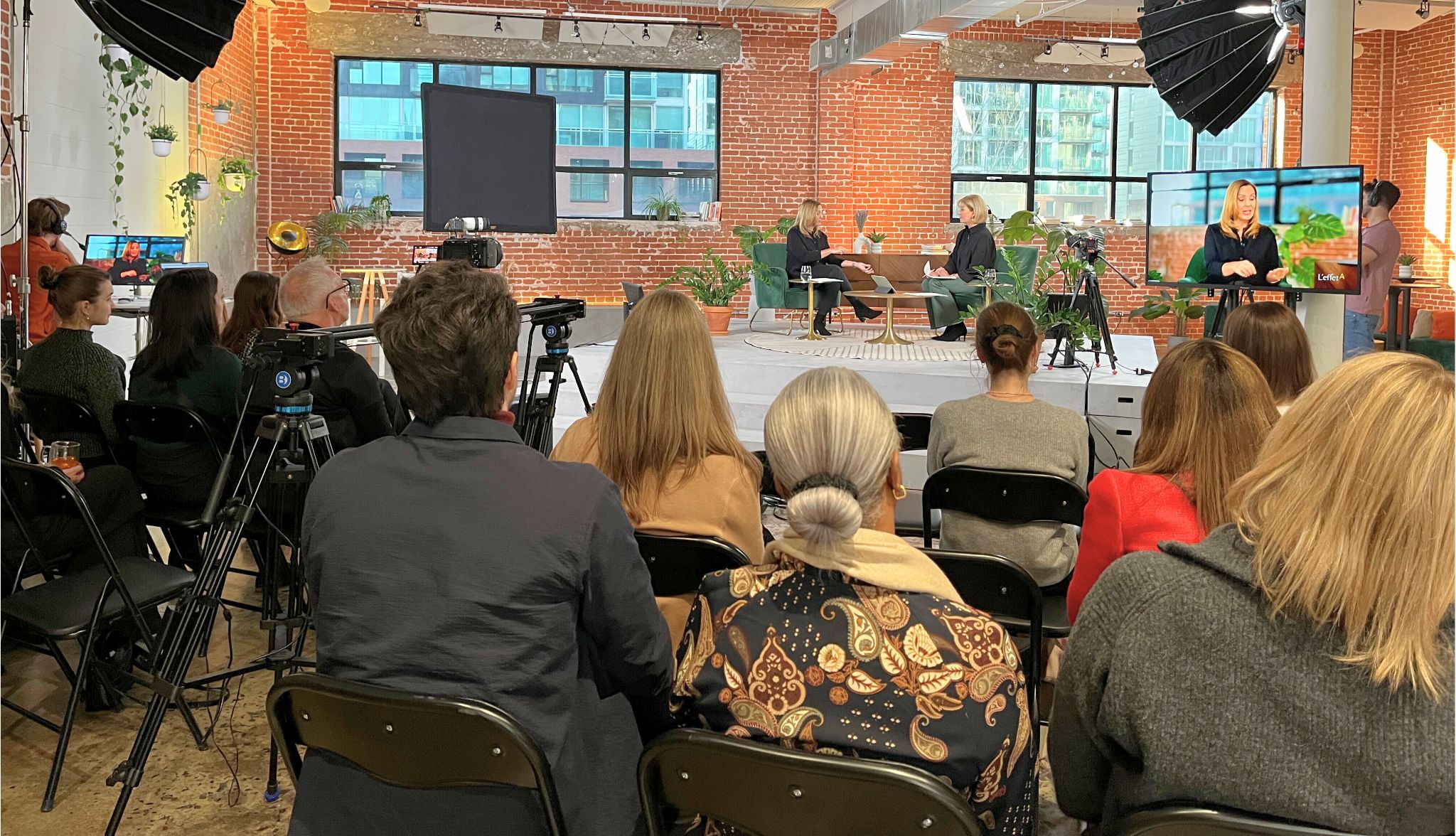
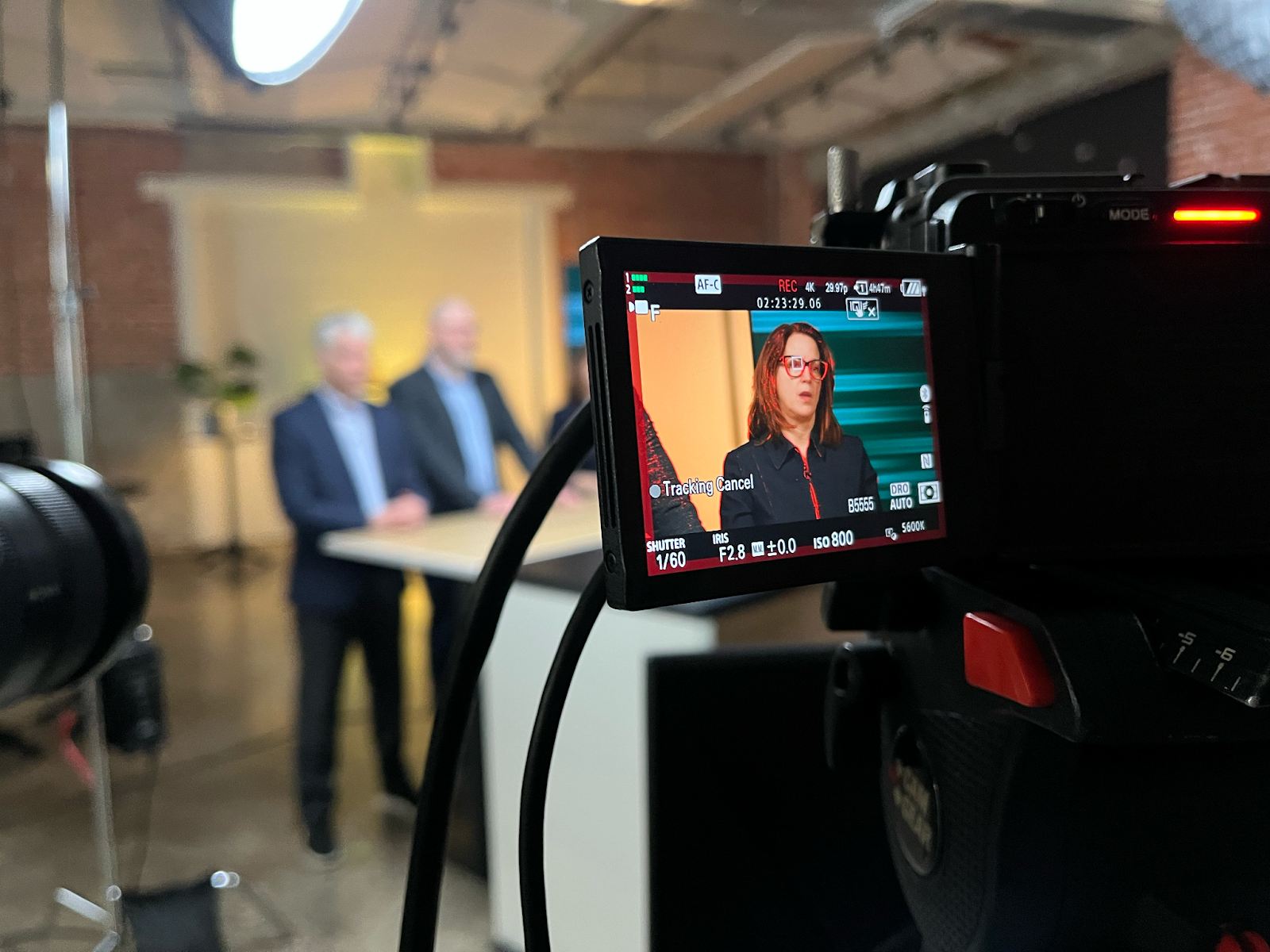
A podcast is a series of recorded episodes, in audio or video, that you can listen to or watch whenever you want. Each episode is stored by a hosting service, which sends it to listening apps such as Spotify or Apple Podcasts through a standard feed. You open an app, search for the show and press play: no subscription fee, no broadcast schedule. At Productions Arborescence, we help businesses produce their own shows, from recording to final edit. The format keeps growing in Canada. According to Signal Hill Insights, 46% of Canadian adults listened to podcasts monthly in 2025, a 19% increase in one year. So what is a podcast and how does it work behind the scenes? Most listeners never see the chain that brings an episode to their phone.
Types of Podcasts: Audio, Video and Episode Formats
Most shows are audio podcasts, an easy format to follow on a commute or during a workout. Video podcasts add a camera feed that can also be cut into clips for social media. Interviews, conversations, non-fiction storytelling and scripted series are the most common formats. Each episode stands on its own while building the larger series.
How Do Podcasts Work, From Microphone to App?
An episode reaches its audience in three steps: someone records and edits it, a hosting service publishes it with an RSS feed, and directories share that feed with every listening app. 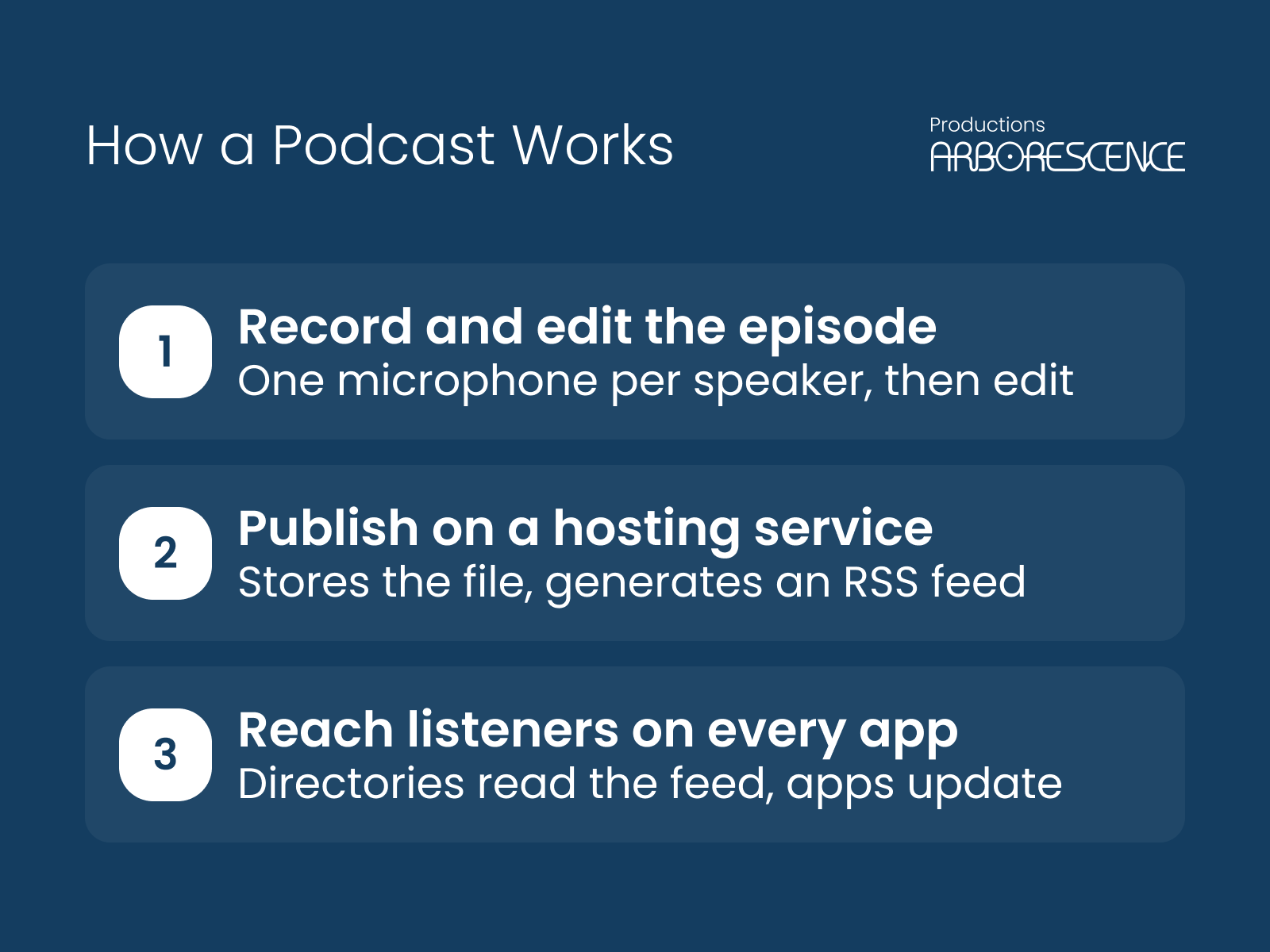
Step 1: Record and Edit the Episode
Recording starts with one microphone per speaker in a quiet, treated room, because room noise is hard to remove afterwards. Editing then trims dead air, balances the voices and adds music. Teams without an editor can outsource this step to our video post-production services. The result is a single audio file, usually an MP3, plus a video file if the show is filmed. Clean recording saves hours of editing.
Step 2: Publish Through a Hosting Service
A hosting service stores the finished file and generates an RSS feed: a list that apps can read, with the title, description, cover art and audio link of each episode. Most hosting platforms handle this technical side for you.
Step 3: Reach Listeners on Apple Podcasts, Spotify and Other Apps
Apple Podcasts, Spotify, YouTube and the other directories read that feed and list the show in their catalogues. When a new episode is published, the apps update automatically. People subscribe once, and their app downloads each new release, so they can even listen offline.
Why Montreal Businesses Create a Podcast
Companies make podcasts for the same reason they produce a corporate video: a recurring show earns attention that a single campaign cannot. Choose a topic your team knows well, commit to a release rhythm, and the show will build steady brand familiarity over time. When you are ready to record, you can book a podcast studio in Montreal with professional microphones, a 3-camera 4K setup and an on-site technician.
FAQ About Podcasts
Here are short answers to the questions we hear most often when clients discover the format.
Are podcasts free, and how do you listen to one?
Yes, the large majority are free, funded by advertising, sponsorship or the brand behind them. To listen, open a listening app, search for the show’s title and press play; most major apps do not require an account. Some shows offer a paid tier for bonus or ad-free episodes, but the main feed stays open to everyone.
What equipment do you need to start a podcast?
A microphone for each speaker, headphones, a quiet room and recording software cover the basics. Add a camera if you also want video. Sound quality depends more on the room than on the price of the gear.
How is a podcast different from a radio show?
A radio show airs at a fixed time on a frequency. A podcast episode waits on a server until you choose to play it, on the device and at the speed you want. Without a broadcast schedule, each episode can run as long as its topic needs.